Phase 1 · Glycogen depletion
The first stretch after your last meal. Your liver is still releasing stored glucose. Blood sugar drifts gently. Ketosis hasn't started.
Fasting Insights · Glucose-Ketone Index
Your CGM measures glucose. We estimate where you are in ketosis from your glucose curve and fasting duration. A directional read, in plain language - not a blood-strip replacement.
You may fast for autophagy, metabolic health, perimenopause, or autoimmune flares. You may simply feel that it clears your head. Every long fast raises the same question. Am I in ketosis yet?
The honest answer used to require a finger-prick and a Keto-Mojo strip. That's still the only way to know for sure. But your CGM already records what your blood sugar is doing hour by hour, and your phone already knows how long it's been since your last meal. That's enough to make a careful estimate.
Body Insights does the estimate, and is plain about what it is: a directional read, not a clinical measurement. When the difference matters, you measure.

The real glucose ketone index - the one developed by Dr. Thomas Seyfried for therapeutic protocols - is the ratio of blood glucose to blood ketones, both in mmol/L. It needs a ketone meter. A Keto-Mojo or Precision Xtra. A finger-prick.
Body Insights does not have access to your blood ketones. CGMs do not measure ketones. What we have is your glucose trajectory, your fasting duration, and the well-described physiology that connects the two. From that we estimate the most likely ketosis range - none, early, light, moderate, or deep.
If you're using fasting casually, the estimate is plenty. If you use fasting as therapy, measure with strips. This includes seizure management, use as a cancer adjunct, or a metabolic condition under a clinician's care. We will say this on the screen, not just here.
Fasting isn't one switch. It's a series of metabolic transitions - and your CGM is reading the surface of every one.
The first stretch after your last meal. Your liver is still releasing stored glucose. Blood sugar drifts gently. Ketosis hasn't started.
Glycogen is mostly gone. Your body begins shifting fuel sources. Glucose drops more noticeably, and the first ketones start showing up in blood.
The shift is on. Glucose has settled lower. Ketones rise. This is the window most fasting protocols target.
The long-fast territory. Glucose is low and stable, ketones are high, autophagy is well underway. This is medical territory - not a place to wander alone.
Body Insights infers which phase you're most likely in from your live glucose and your time-in-fast. Plain-language label, not a number you'll game.
Free for core features. CGM optional.
Long before the GKI question comes the more basic one: should you be fasting this morning? For a healthy thirty-year-old the answer is usually yes. For a body managing chronic illness, perimenopause, a hard week, or post-viral recovery, the answer is - sometimes.
Body Insights reads your overnight HRV and yesterday's strain. It also reads sleep duration, sleep efficiency, and morning glucose. It returns a plain-language read: "Today has room for a longer fast" - or "Eat breakfast today. Your nervous system is asking for fuel."
Sleep and HRV carry the most weight; glucose stability rounds it out. The point is to put rest, fasting, and feeding on the same page rather than treating fasting as a discipline metric.

Everything below is what an honest fasting analytics tool should tell you. If you're comparing options - Zero, Fastic, LIFE Fasting, Senza - you're in the right place.
Reads from Apple Health. Your Apple Watch tracks HRV and sleep. Your CGM writes glucose. We translate.
The shape of your CGM curve through the fast - not the absolute number. The trajectory is what matters.
How long since your last meal, tracked from the fasting timer or inferred from your eating window.
None, early, light, moderate, or deep - labeled clearly as an estimate. Confirm with strips when it matters.
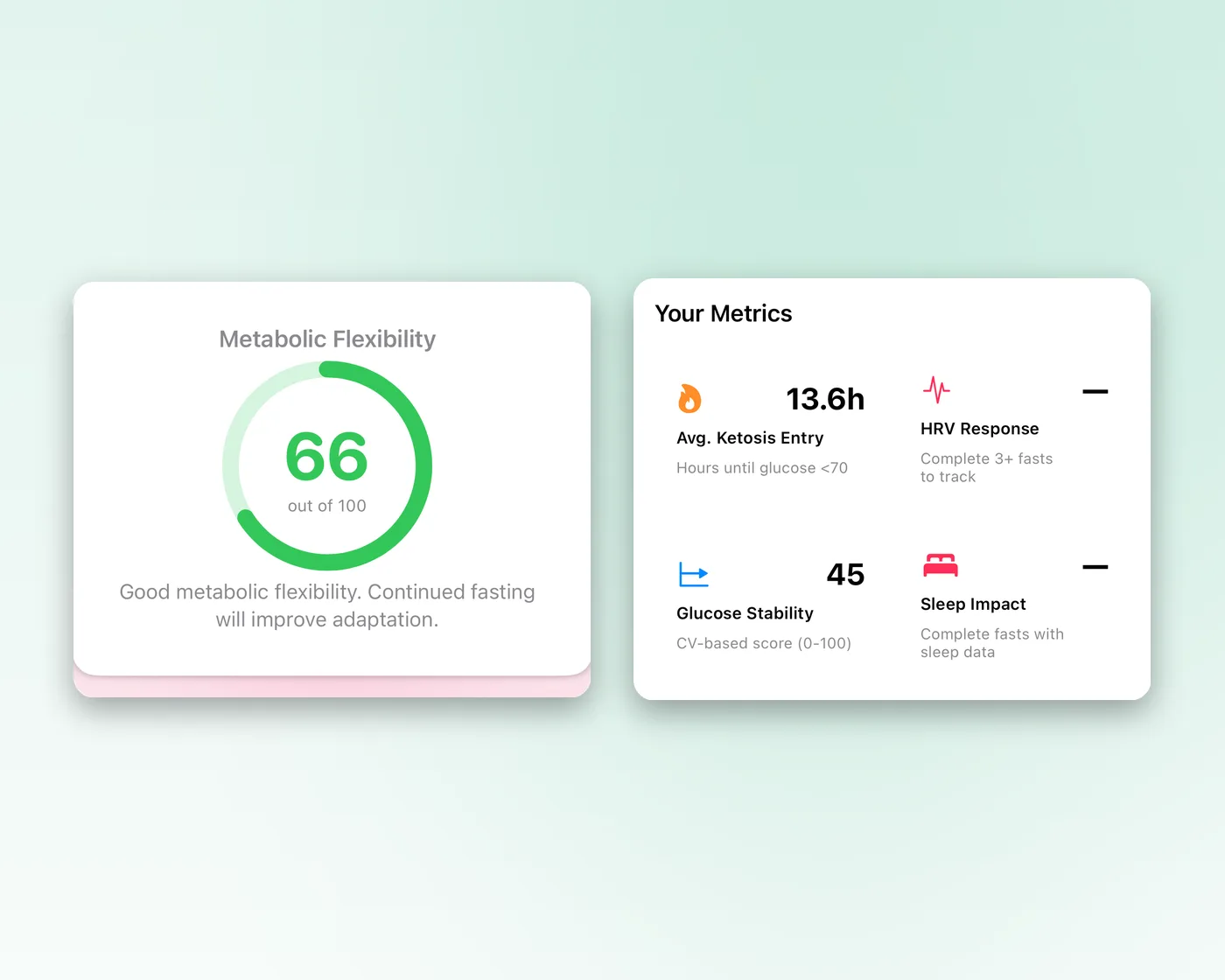
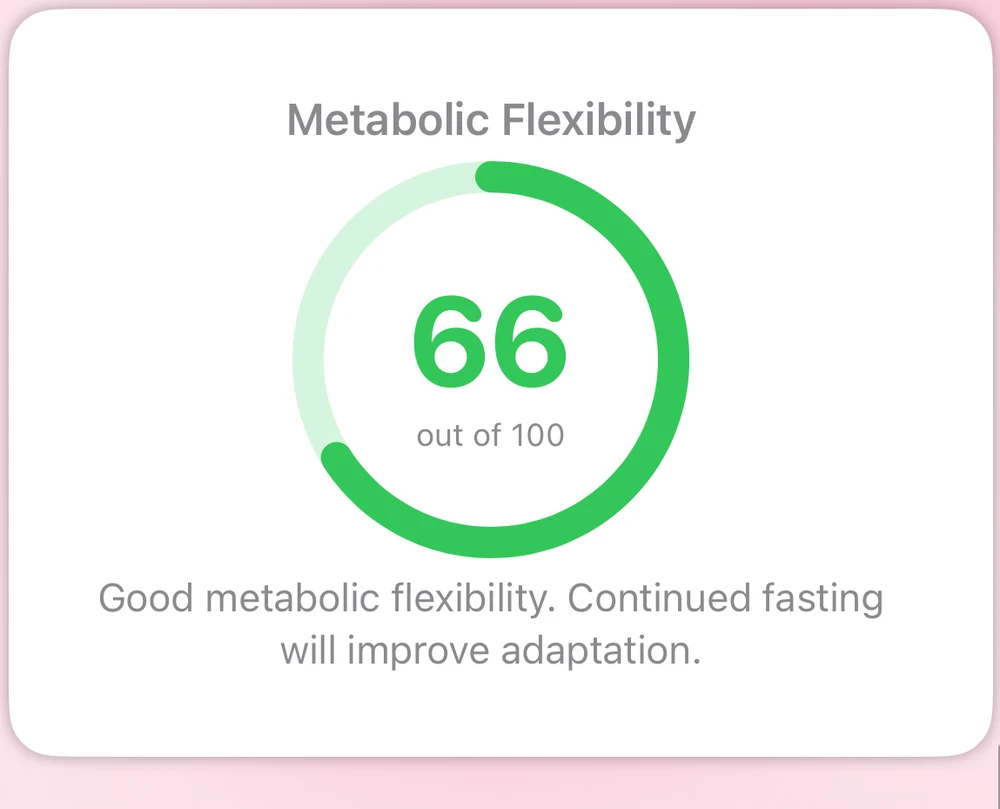
Across many fasts: how quickly your glucose settles, how stable it stays, how your body handles refeeding. The trend is the read.
What happens when you break the fast. A clean return is a sign of metabolic adaptation. A long, high spike is worth noticing.
HRV, sleep, glucose, and yesterday's strain combined into a plain-language read on whether today's a fasting day.
Therapeutic ketosis is medicine. It may be used as an adjunct for epilepsy, certain cancer protocols, metabolic disorders, and some neurological conditions. It's run with clinicians. It uses blood ketone meters, not estimates. It's titrated against symptoms and labs.
Body Insights is not a medical device, not a diagnostic tool, and not a substitute for your care team. If you're fasting under clinical supervision, use the tools your clinician recommends and bring our trends in as context, not authority.
Talk to a clinician before extending a fast if you have diabetes or a history of an eating disorder. Do the same if you are pregnant, breastfeeding, or managing a serious chronic illness. Also ask if you take medication that can interact with fasting.

Most fasting apps are timers with streaks. The point of this one is different.
| Zero / Fastic | Keto-Mojo + paper | Body Insights | |
|---|---|---|---|
| Fasting timer | Yes | No | Yes |
| GKI from blood strips | No | Yes (gold standard) | Manual entry supported |
| GKI estimated from CGM | No | No | Yes |
| Today's tolerance read | No | No | Yes |
| Metabolic flexibility trend | No | Manual | Yes |
| Post-fast glucose response | No | No | Yes |
| Subscription | $5-10 / month | Strips ~$1 each | Free for core |
If you're managing therapeutic ketosis, Keto-Mojo with paper logs is still the right call. If you're fasting for metabolic health and want a read on what your body is actually doing - without buying strips for every fast - that's where this fits.
The ratio of blood glucose to blood ketones, both in mmol/L. Developed by Dr. Thomas Seyfried as a single number describing depth of therapeutic ketosis. Lower numbers mean deeper ketosis.
No. We estimate it from your CGM glucose and fasting duration. A true GKI needs blood ketones from a meter. We give you a directional read - not a clinical measurement.
Directional, not diagnostic. Useful for trend-reading and casual fasting. For therapeutic protocols, epilepsy management, or oncology adjunct work - measure with strips.
It's a medical intervention used as an adjunct in epilepsy, certain cancers, and metabolic conditions. It requires clinical supervision. We are not your care team - talk to one before pursuing it.
For the GKI estimation layer, yes - Stelo, Dexcom, or Libre. Without one, you still get today's tolerance read from HRV and sleep, but the ketosis estimate drops out.
Free for the core fasting timer and tolerance read. GKI estimation and metabolic flexibility tracking are premium. No card needed to start.
On-device. No account. No subscription required. No data sold. Ever.

Free for core fasting features. Premium adds GKI estimation and metabolic flexibility tracking.
