Morning daylight minutes
Time in daylight conditions between 6 AM and noon. The single most useful number for circadian anchoring.
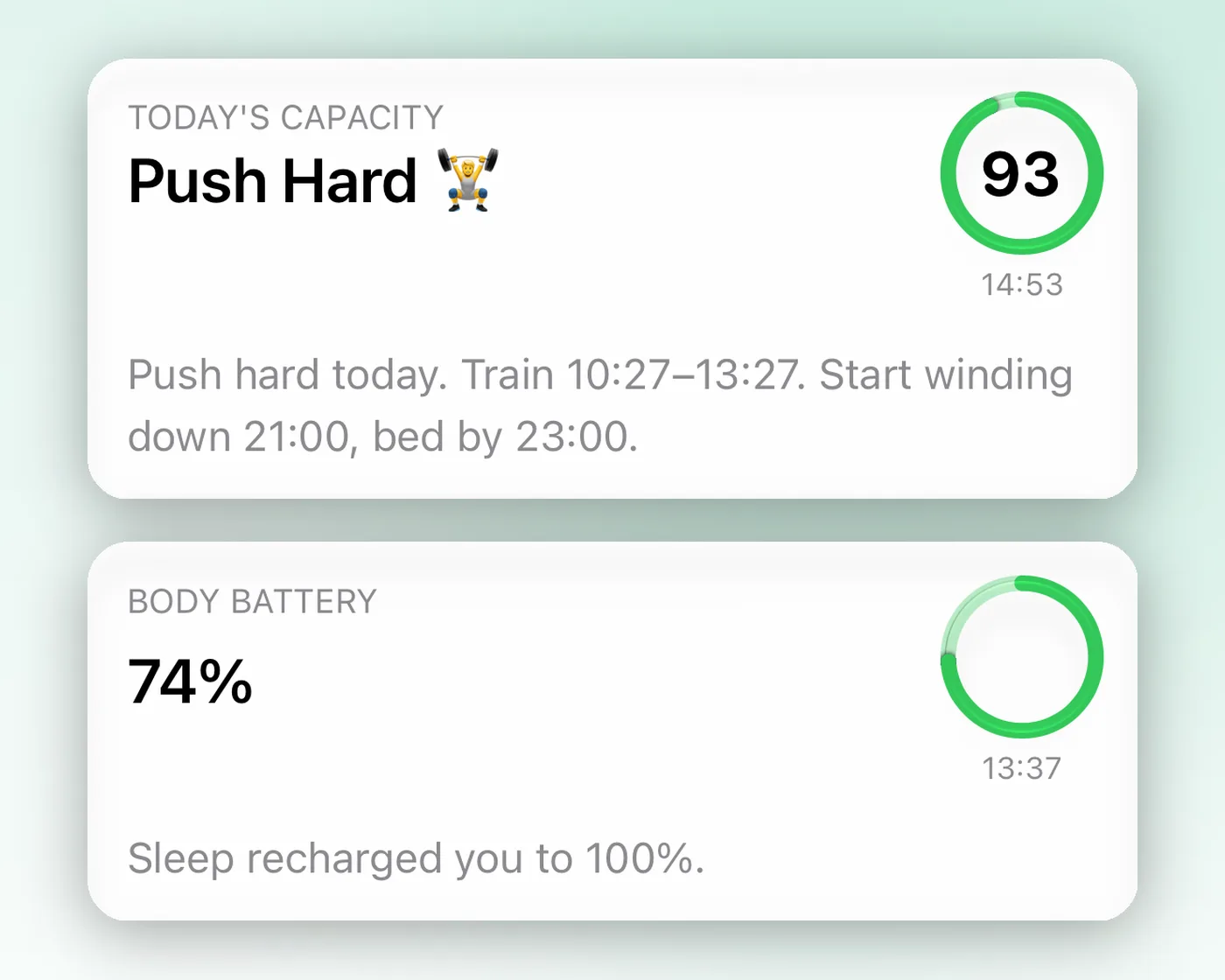
Morning Light Exposure · Auto-tracked
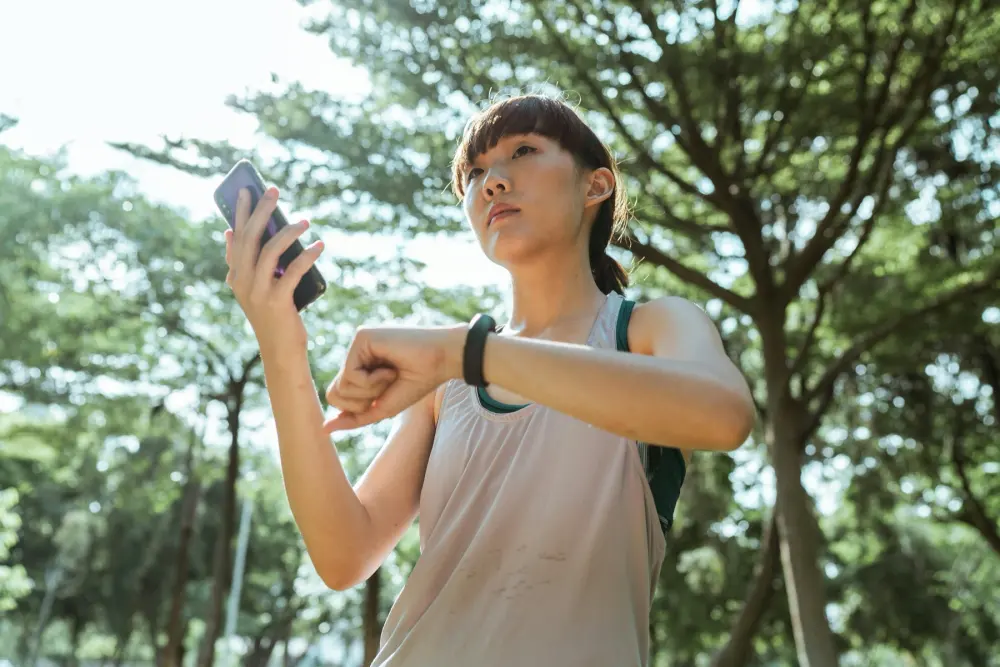
Your Apple Watch's ambient light sensor logs daylight quietly, all day. Body Insights reads what it recorded and tells you whether your circadian clock got the signal it needed - without asking you to log a thing.
The advice is everywhere: get morning sunlight in your eyes within thirty minutes of waking. It's good advice. It's also written for people whose mornings include a porch, a dog, and the energy to put shoes on.
That advice lands differently with ME/CFS or Long COVID. The same is true with fibromyalgia or an autoimmune flare. Perimenopause can also make mornings feel like wading through silt. Some days you can. Many days you can't. And tracking apps that demand you remember to log a 20-minute walk are adding a chore to a body already rationing.
Body Insights is built for the reality that morning light is a useful signal, not a moral one. When your Apple Watch records that you got it, we say so. When the day didn't allow for it, we record zero and move on - no shame, no streak guilt, no orange dot of failure.
Buried in your hypothalamus is a clump of about twenty thousand cells called the suprachiasmatic nucleus. It runs on a cycle that's slightly longer than 24 hours and uses light - specifically the spectrum and intensity of morning daylight - to reset itself each day.
Charles Czeisler and colleagues studied timed bright light at Harvard in the 1980s. They showed that it shifts this pacemaker in a reliable way. The size of the shift depends on the dose. Sat Bir Khalsa later mapped the phase-response curve in more detail. Even moderate daylight can move the circadian phase earlier. The light can be much weaker than direct sun. It must arrive during the morning window.
That reset helps other rhythms line up. Cortisol crests in the morning instead of mid-afternoon. Melatonin rises on time at night. Body temperature dips before bed. When it doesn't, you've probably felt the result - wired-tired, falling asleep at 4 AM, waking unrefreshed regardless of hours in bed.
Since watchOS 10, Apple Watch (Series 6 and later) records a HealthKit metric called timeInDaylight. The ambient light sensor distinguishes outdoor brightness from indoor light. The watch writes those daylight minutes to Apple Health automatically.
Most apps ignore this metric. Body Insights reads this data and sorts the minutes by time of day. It shows what your circadian system received in the morning, afternoon, and evening. No logging. No "did you go outside today?" prompts. The watch you already wear has been keeping a quiet record.
The morning summary reads, in plain language: "You spent 42 minutes in daylight before noon - your clock got a clear signal today." Or, just as honestly: "No daylight before noon today. Window light near the kitchen counts if you can manage it."

Free for core features. No card needed.
Everything below is what an honest morning-light tracker should tell you. If you're comparing apps or just want the underpinnings, this is where they live.
Body Insights uses thirty minutes of daylight between 6 AM and noon as the meaningful threshold. That number comes from circadian research, not from us. The research supports 30 to 60 minutes of outdoor light on most days. This gives the clock a strong timing signal.
The threshold is a marker, not a verdict. Twenty minutes is real. Ten minutes is real. The number we surface is the minutes your watch measured, with the threshold drawn as a quiet reference line. Your eyes receive more lux per minute on a bright day than on a foggy morning. The signal can land faster. Your watch cannot measure the full difference, but it gets close.
What we will never do: turn this into a streak with a shame mechanic. Many of our readers manage conditions where a streak counter is actively harmful. The number is information. What you do with it is yours.


A common bit of gatekeeping in the wellness internet is that window light "doesn't count" because glass blocks some spectrum. The practical version is more nuanced.
Direct outdoor light on a clear day delivers 10,000 to 100,000 lux. Bright daylight through a window typically delivers 1,000 to 5,000 lux - dimmer, but still well above the threshold at which the circadian system responds. Khalsa studied ordinary indoor to moderate light. The work found a measurable phase response well below outdoor brightness.
You can also spend twenty or thirty minutes near a south-facing window. Have coffee, eat breakfast, read, or use your laptop there. Your clock still gets a real morning signal. Apple Watch's ambient light sensor reads it as daylight when the brightness is high enough, and Body Insights counts it the same way.
On the days you can get outside, the signal is faster. On the days you can't, the window is not a failure - it's the version of the practice that's actually available to you.
Reads ambient-light data from Apple Health - written automatically by the watch you already wear.
Time in daylight conditions between 6 AM and noon. The single most useful number for circadian anchoring.
The same metric split by time of day. Evening daylight is honest information - useful in summer, worth knowing when sleep slips.
The 30-minute morning marker drawn as a quiet reference, not a pass/fail. Less still counts. More on a bright day reaches the eye faster.
Two weeks of mornings at a glance. Where the trend is more useful than any single day.
Mornings with strong light, paired against that night's sleep efficiency and onset time. The downstream effect, made visible.
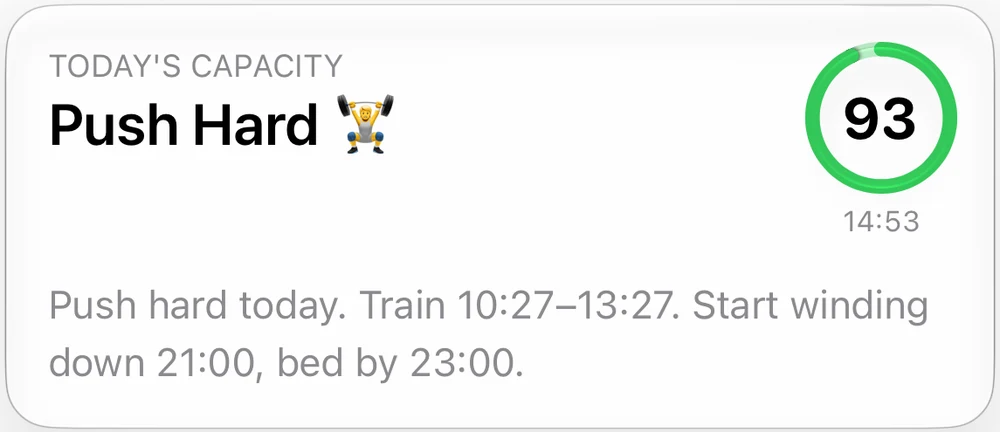
One sentence in the morning. Not a score. A read of what your clock did or didn't get, and what's worth knowing.
Most apps either ignore daylight entirely or ask you to log it manually. Here is how the options differ.
| Manual-log apps | Sun-only tracker apps | Body Insights | |
|---|---|---|---|
| Auto-detects daylight | No | Partial (GPS) | Yes (watch sensor) |
| Counts window light | Depends | No | Yes |
| Tied to sleep / circadian read | No | No | Yes |
| Streak or shame mechanic | Usually | Often | None |
| Built for chronic illness | No | No | Yes |
| Subscription | Varies | Common | Free for core |
Other apps were built for an audience whose mornings work like a schedule. This one is built for an audience whose mornings vary - and for whom a missed walk is not a moral event.
It anchors the circadian clock. This supports steadier sleep onset and a more consistent cortisol rhythm. It also supports daytime alertness. Czeisler and Khalsa established the underlying physiology in peer-reviewed work in the 1980s and 1990s.
Thirty minutes between 6 AM and noon is the threshold we use, in line with circadian-research consensus. Less is still real. More on a bright day reaches the eye faster.
Yes. Window light is dimmer than direct outdoor light, so it takes more time for the same signal - but it counts, and Body Insights treats it that way.
Apple Watch logs minutes spent in daylight-level brightness. It uses the ambient light sensor. Apple Health stores the result as timeInDaylight. We read that value.
Then you can't. Window-side counts. Afternoon counts as a partial signal. Zero is recorded as zero - never as a failure.
No. Outdoor or window daylight is more than sufficient on most days. Lamps are an alternative on seasonal or housebound days but aren't auto-tracked by the watch sensor the same way.
On-device. No account. No subscription required. No data sold. Ever.

Free for core features. No logging required.
