Intensity shape
How much of the session lived in higher heart-rate zones. Sustained efforts deplete glycogen more than easy aerobic time, and the body spends longer refilling it.

Post-Workout Glucose Safety · 6-10 hour warning
Hypoglycemia after exercise often arrives long after the workout ended - frequently overnight. Body Insights reads your CGM and your training and surfaces the delayed-dip window before it opens.
Not a verdict - a pattern. After hard training, glucose can drift quietly downward long after the watch stops recording.
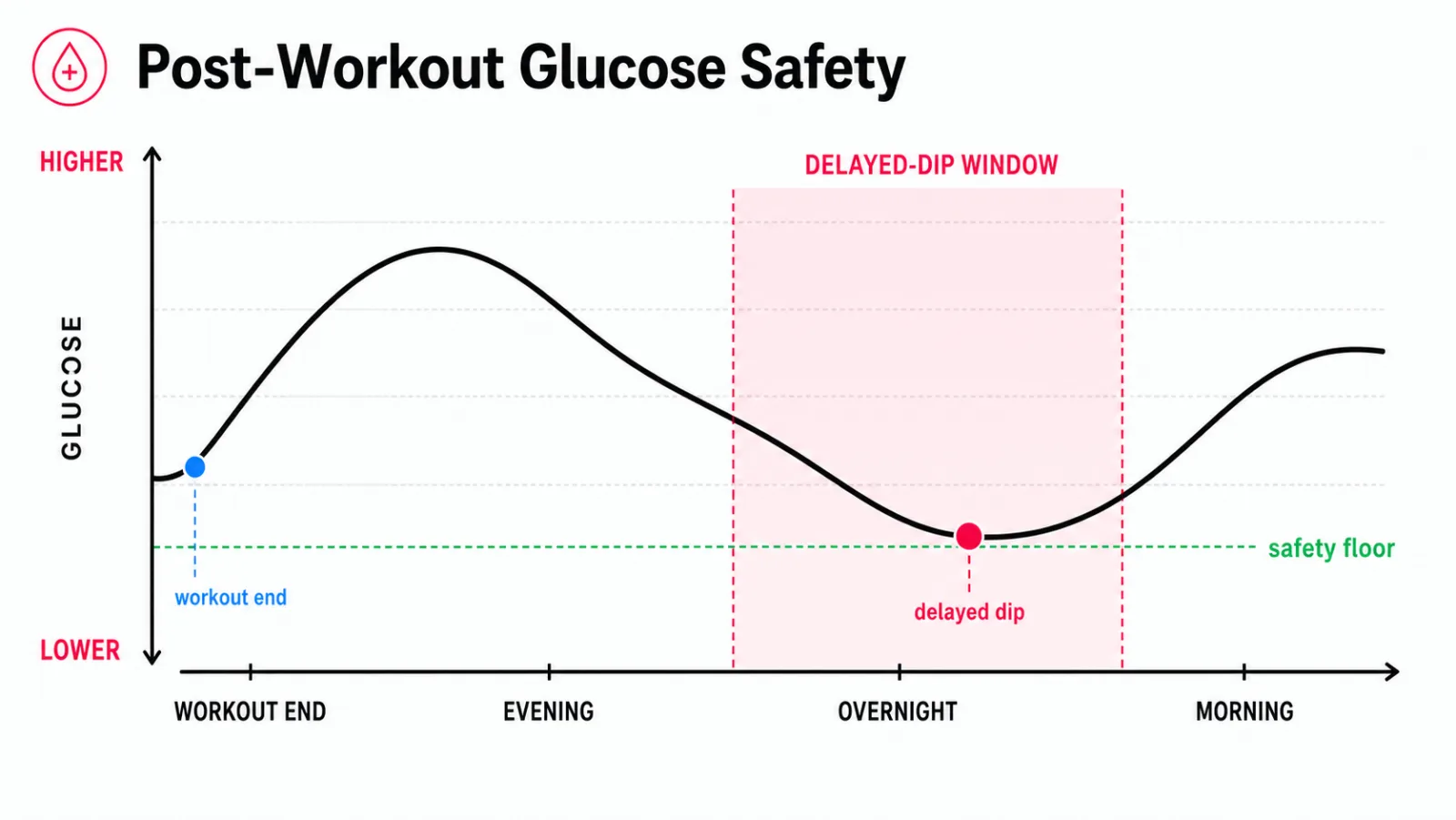
The drop can arrive hours after an evening or fasted workout. It is quiet and easy to miss. Your CGM can show the pattern before your body does.
And then, somewhere between dinner and dawn, your blood sugar quietly slid downward.
This is the part of exercise physiology most apps don't model. Hard training depletes muscle glycogen. Your muscles refill glycogen after the workout. They keep pulling glucose from your blood to do it. Insulin sensitivity also stays elevated for a day or more. For people on insulin, that combination is a setup for a late-onset drop. For everyone else with a CGM, it's the kind of pattern that explains why some nights feel ragged for no apparent reason.
Body Insights reads your workout data and your CGM together and surfaces the window where a delayed dip is most likely. You get the heads-up before sleep, not after.
For people living with type 1 diabetes, this is not a new conversation. Endocrinologists have warned patients about late-onset hypoglycemia after exercise for decades. Many athletes with T1D already make a manual version of this read. They check glucose before bed. Some eat a slow-carb snack after heavy training. Others set an overnight alarm after a hard ride. The point of this feature isn't to replace any of that. It's to give the pattern a name on the screen, so the decision is grounded in what your CGM is actually drawing, not in what you remember from last Tuesday.
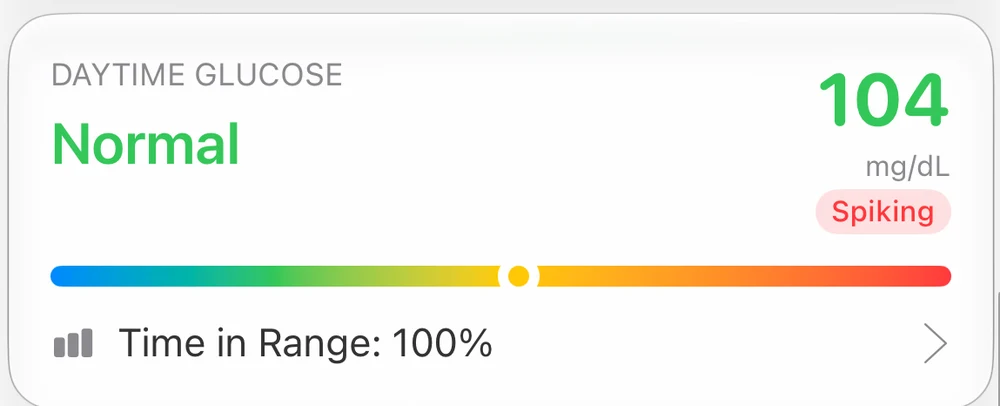

If you train in the morning, a late-onset dip lands during a workday - close to food, easy to catch. If you train at night, it lands during sleep. You are not awake to notice the trend, and you are not eating. A drift that would be clear at noon becomes a quiet line. You may only see it on the chart in the morning.
Fasted workouts compound it. So does hitting the higher heart-rate zones for any sustained stretch. None of this is dangerous on its own - it's just useful to know which sessions tilt the balance, and which ones don't.
This is what we mean by "the watch already knows." Your Apple Watch recorded the workout. Your CGM recorded the descent. The work is in putting those two streams in the same sentence.
Not medical advice
Body Insights is not a medical device and does not diagnose, treat, or manage diabetes. If you have type 1 diabetes or use insulin, your endocrinologist sets your safety plan. This includes your insulin dose and overnight basal. Talk to them before you change anything. Use what we surface as one input alongside their guidance, never as a replacement for it. Confirmatory fingersticks remain part of safe management.
Free core app. Metabolic features in premium.
This longer read is for endurance athletes with type 1 diabetes. It also helps coaches who use CGM data. It may explain a repeated overnight pattern after hard rides.
Reads workout, heart-rate, and continuous glucose data from Apple Health - the streams your Apple Watch and CGM already write there. No new account, no new hardware, no separate cloud.
How much of the session lived in higher heart-rate zones. Sustained efforts deplete glycogen more than easy aerobic time, and the body spends longer refilling it.
Length of the workout and where it sat in your day. Later sessions push the delayed-dip window into sleep - the most consequential place for it to land.
How your CGM trace moved during and after the workout. The rate of descent in the hours after a session is one of the cleanest signals of a late-onset dip on the way.
Whether you trained on board with food or empty. Fasted sessions tilt the post-workout window toward a steeper drop, and we read for that context.
Whether the predicted window lands while you're asleep. That single overlap changes how the read gets surfaced - earlier in the evening, while you can still act.
Not a score. A short sentence before bed: "Last session was harder than usual. Consider a snack with protein and slow carbs tonight."
Three physiological things happen at once and they don't peak together.
Glycogen replenishment - muscle cells pull glucose out of the bloodstream to refill the stores they spent during the workout. The deeper the spend, the longer the refill runs.
Enhanced insulin sensitivity. Exercise raises insulin sensitivity. The effect lasts long after the session ends. For people on exogenous insulin, the same dose works harder than it did the day before.
Persistent GLUT4 activity. Exercise pulls these glucose transporters to the cell surface. They stay active long after you cool down. They keep moving glucose from the blood into muscle.
Together, these processes can delay the drop. You may feel fine right after the workout. Clinical research has tracked this window for decades. Post-exercise late-onset hypoglycemia has its own name and management protocols. Body Insights doesn't invent that physiology. We just read it on your own CGM and your own training.
The other piece worth naming is individual variability. The same workout can produce different overnight curves on different days. Your earlier meal and sleep can change the response. A low-grade infection can change it too. Many other inputs also matter. A single model can't capture that. A pattern read across weeks of your own data can. Body Insights learns from your sessions and overnight traces over time. It finds which workouts produce your delayed dip and which do not. It also shows which evenings may call for keeping something on the nightstand.

Workout apps stop reading at the end of the session. CGM apps don't know what the workout was. Body Insights reads both.
| Workout apps | CGM apps | Body Insights | |
|---|---|---|---|
| Reads workout intensity | Yes | No | Yes |
| Reads CGM trend | No | Yes | Yes |
| Predicts the delayed-dip window | No | No | Yes |
| Warns before sleep, not after | No | Partial | Yes |
| Plain-language summary | No | No | Yes |
| Extra hardware | Watch only | CGM only | Reads both |
If you're an athlete with type 1 diabetes, you've probably built this read for yourself by hand - looking at your Garmin, your Dexcom share, and a piece of paper. The point of this feature is doing that reading for you, every time.
Muscles refill glycogen by pulling glucose from your blood for hours after a workout. Insulin sensitivity also rises and stays raised. The combination can drift glucose downward long after you've finished.
The late-onset window typically opens many hours after a hard session. Evening and fasted workouts move that window into sleep - which is why it's so often missed.
No. We are not a medical device. If you use insulin, your endocrinologist sets your dosing and your overnight plan. Treat what we surface as a pattern read, not a prescription.
Yes for this feature. The delayed-dip read depends on continuous glucose data - Stelo, Dexcom, or Libre via Apple Health. The rest of the app works without one.
No. CGM trends tell you direction; a fingerstick confirms the number. For anyone on insulin, confirmatory testing and your clinician's protocol come first.
The physiology of a delayed dip is most clinically consequential for people on insulin. For everyone else with a CGM, it's a window into how training and meals interact overnight - useful, not urgent.
On-device. No account. No subscription required for the core app. No data sold. Ever.
Free for core features. Metabolic premium adds the post-workout glucose-safety read.
